If you’ve ever felt like a conversation slipped away from you, or watched someone “control the room” without raising their voice, you’ve witnessed frame control in action.
And whether you’re a hypnotherapist guiding a client into trance, a coach helping someone rewrite a stuck story, or simply someone who wants to handle a tough conversation with more skill, learning to recognize and shape frames is one of the most powerful upgrades you can make to your communication.
This guide will show you what frames really are, why they matter so much in hypnosis and everyday life, and how to start setting them on purpose — ethically, and without anyone feeling pushed.
What Is A Frame?
A frame is the meaning a person assigns to a situation before any words are exchanged.
Walk into a job interview, and your frame is probably “I’m being evaluated.” Sit down with an old friend, and your frame might be “I’m safe here.” Get pulled aside by your boss, and the frame becomes “Am I in trouble?”
These frames shape everything that happens next.
Behavior expert Chase Hughes, who has spent more than two decades teaching influence to military, intelligence, and corporate leaders, describes the frame as part of a three-step cascade he calls the PCP model: Perception, Context, and Permission.
Change someone’s perception of what’s happening, and you change the context. Change the context, and you change what behavior feels acceptable.
This is especially important for hypnotherapists, because the frame your client walks in can shape the outcomes of your entire session. A client framed to expect “a partnership where my unconscious does the work” responds differently than one expecting “the hypnotist is going to take control of my mind.” The session hasn’t even started yet, but the outcome has already been half-written.
Even outside of hypnotherapy, frames are everywhere. Most people just never notice them — which is exactly why the people who do notice them have an edge.
The Research: Why Frames Are More Powerful Than Facts
In 1981, psychologists Amos Tversky and Daniel Kahneman ran one of the most replicated experiments in modern psychology — the famous Asian Disease Problem. They asked participants to imagine an outbreak threatening 600 lives and to choose between two treatment programs: a safe option with a guaranteed result, or a risky gamble that might save everyone or save no one.
Both groups were given the same two programs. The only thing that changed between the groups was the wording.
The first group saw the choice described in terms of saving lives:
- Safe option: “200 people will be saved.”
- Risky option: A 1-in-3 chance everyone is saved, a 2-in-3 chance no one is saved.
The second group saw the exact same outcomes described in terms of losing lives:
- Safe option: “400 people will die.”
- Risky option: A 1-in-3 chance no one dies, a 2-in-3 chance everyone dies.
Mathematically, the two groups had identical choices. But the results were dramatically different.
In the first group, 72% of people chose the safe option. In the second group, most people rejected the safe option and chose the risky gamble instead.
The only thing that changed was the framing.
This finding helped earn Kahneman a Nobel Prize and has been replicated for decades, including in recent pandemic-related research showing the effect holds up in real-world health decisions.
The takeaway: the way a situation is framed can completely override the facts of the situation. And if you’re not the one framing it, somebody else is.
Why Frames Matter In Hypnosis
Long before behavioral economists were running these experiments, Milton Erickson — the father of modern clinical hypnosis — was building his entire approach around frames.
Erickson called it reframing, and it became one of the foundational tools that Richard Bandler and John Grinder later modeled when they developed NLP. The core idea is that the meaning we attach to an experience is rarely fixed. Change the meaning, and the emotional response changes with it. A client who arrives saying “I’m broken” leaves the session saying “I’ve been protecting myself” — same history, transformed frame.
Frame control matters in hypnosis for three big reasons:
- The frame determines whether trance happens at all. A client who walks in with the frame “this is going to feel weird” will resist induction. A client whose frame is “this is going to feel like a really nice rest” will drop into trance often before you’ve finished the pre-talk.
- The frame shapes how suggestions land. A suggestion delivered inside the frame of “you’re discovering something true about yourself” is far more likely to take hold than the same suggestion inside the frame of “the hypnotist is trying to make me think this.”
- The frame defines the relationship. Are you a collaborator, a guide, an authority figure, or a friend? Your client decides — usually within the first 60 seconds. If you don’t set that frame on purpose, their unconscious will set it for you, often based on whatever frame their last therapist, dentist, or strict teacher imprinted on them.
Ericksonian hypnotists, conversational hypnotists, and skilled coaches all share one trait: they set the frame on purpose, and they set it early.
How To Spot Frames In Everyday Life
Before you can set frames, you need to start noticing them. Once you do, you’ll see them everywhere.
Here are some everyday examples worth paying attention to:
- News coverage. “In another piece of terrifying news…” — the frame is set before you’ve heard a single fact. The same political event can be framed as “a bold reform” or “a dangerous overreach,” and most viewers will never notice the framing did most of the work.
- Sales pitches. “Most people in your position are tired of being oversold to” — the frame is set before any product is mentioned. You’re now positioned as someone discerning, which makes you more likely to listen.
- A doctor’s office. “Don’t worry, this is just a routine check-up” sets a frame of safety. “We need to run a few more tests” sets a frame of concern. The same medical situation, two completely different emotional experiences.
- A first date. “I’m so glad we could finally meet — I’ve been looking forward to this” sets a frame of warm familiarity. Awkward small talk about the weather sets a frame of strangers performing politeness.
- Workplace meetings. “Let’s figure out what’s gone wrong” versus “Let’s figure out how we get this back on track” — same meeting, two different rooms.
A useful exercise: for the next 24 hours, every time someone speaks to you, ask yourself, “What’s the frame they just set, and did I accept it?” You’ll be surprised how often you’ve been operating inside someone else’s definition of the situation without realizing it.
How To Set The Frame In Any Conversation: A Step-By-Step Approach
Here’s a practical sequence you can use whether you’re starting a hypnosis session, walking into a negotiation, or sitting down to dinner with someone new.
Step 1: Decide What You Want The Frame To Be — Before You Walk In
This sounds obvious, but most people skip it. Before any important conversation, ask yourself two questions:
- What outcome do I want from this conversation?
- What would the other person have to be feeling and believing for that outcome to happen naturally?
If you want a cooperative meeting, the frame needs to be “we’re collaborators solving something together.” If you want a relaxed first date, the frame needs to be “two interesting people enjoying each other’s company.” If you want a productive hypnosis session, the frame needs to be “this is a safe, focused space where change happens easily.”
You can’t set a frame you haven’t defined.
Step 2: Speak The Frame Out Loud — Early
One of the simplest ways to set the frame is to openly say it as the conversation begins. Most people don’t do this. They sit down, exchange small talk about the weather, and let the frame form on its own — usually badly.
Here’s what setting the frame out loud actually sounds like in different situations:
- Before a tense meeting: “I’m glad we could finally get everyone in the same room. There are a lot of competitive mindsets out there, and it’s good to be working with people who lean toward collaboration.”
- Before a hypnosis session: “What I love about this work is that it’s a partnership. Your unconscious knows things mine doesn’t, and my job is just to help you create the conditions to access them.”
- Before a difficult conversation with your teen: “I’m glad we can talk about this calmly. This isn’t about getting in trouble — it’s about figuring something out together.”
- Before a first date: “It’s so refreshing to meet people who are willing to skip the boring stuff and have an actual conversation.”
In each case, you’ve defined what kind of interaction this is — and you’ve done it before anyone else got a chance to.
Step 3: Anchor The Frame With A Permission Phrase
A useful pattern is to layer in a phrase that sounds tentative but actually invites agreement: “I might be wrong about this, but my sense is that what we’re really here to do is…”
Almost no one will object to “I might be wrong about this.” But the moment they nod or say “no, that’s right,” they’ve ratified your frame as their own. This is identical to what Erickson called the principle of utilization — using whatever the other person brings (including their natural agreement reflex) to deepen the work.
This connects to one of the most replicated findings in social psychology: Robert Cialdini’s principle of commitment and consistency. In the classic Freedman and Fraser study from 1966, homeowners who first agreed to display a small “drive safely” sticker were dramatically more likely to later agree to a much larger, much uglier yard sign — because once we make a small commitment, we work to stay consistent with it.
The same dynamic applies to frames. A small spoken agreement about the frame becomes the foundation everything else gets built on.
Step 4: Hold The Frame When It Gets Tested
Frames will be tested. Someone will say something off-topic. An emotional moment will pull the conversation sideways. A client will go quiet or make a joke to break the tension. This is normal. The skill isn’t avoiding these moments — it’s gently returning to the frame you set.
This is essentially what experienced hypnotherapists do during change work. When a client drifts, you don’t yank them back — you reorient: “And as you notice that thought passing by, you can come back to what we agreed to focus on today…” The frame holds. The work continues.
In a meeting or negotiation, it sounds like: “That’s a fair point, and I want to come back to it. But to keep us on track with what we said we’d accomplish today…”
Step 5: Match The Frame With Your Body
A frame is only as strong as the person delivering it. If you set a calm, confident frame while you fidget and avoid eye contact, the frame won’t hold. Your body has to agree with your words.
People will accept your frame to the degree that you embody it. Confidence, groundedness, and genuine warmth do most of the work. If you’re warm and present, your “let’s do this together” frame will land. If you’re tense and rushed, the same words will feel like a sales pitch.
A Few Examples Of Frames You Can Set On Purpose
Here are some frame ideas drawn from real situations that hypnotherapists, coaches, and everyday communicators can use:
Frame: “We’re solving something together.” Use it when: meetings, difficult conversations, intake sessions. Sounds like: “I’m glad we could meet today. The best work I’ve ever done with anyone has come from rooms where people were genuinely trying to figure something out together — not perform or posture.”
Frame: “This is a safe space to be honest.” Use it when: hypnotherapy sessions, coaching, sensitive conversations with a partner. Sounds like: “What we say in here doesn’t go anywhere else. The only person you have to be honest with is yourself, and even that can take its time.”
Frame: “Change happens easily here.” Use it when: opening a hypnosis session, or whenever a client expects struggle. Sounds like: “It’s funny how often the things people thought would be hardest turn out to shift the most easily, once the conditions are right.”
Frame: “We already agree on what matters.” Use it when: negotiation, conflict resolution, family discussion. Sounds like: “I think we both want the same thing here, even if we’d describe it slightly differently. Let’s start with where we agree and work outward.”
Frame: “You’re already the kind of person who can do this.” Use it when: working with a client who doubts themselves. Sounds like: “The fact that you booked this session tells me a lot. Most people put it off for years. You’re already doing the part most people never get to.”
Notice that none of these are manipulative. They aren’t tricks designed to get someone to do something against their interest. They’re invitations into a more useful version of the conversation that’s already happening.
The Ethical Line: Influence vs. Manipulation
Frame control sits in the same ethical territory as conversational hypnosis itself. Used with integrity, it helps people show up as their best selves and have more useful conversations. Used badly, it manipulates someone into a frame that benefits you at their expense.
The simple test: does the frame I’m setting serve the person I’m setting it with, or only me?
A hypnotist who sets the frame “this will be a relaxing, helpful experience” is being honest about what’s about to happen — the frame describes the truth. A salesperson who sets the frame “we’re old friends here” when they’re really just trying to close you is using a frame to deceive. The technique is identical. The intent makes one ethical and the other not.
Influence at its best opens doors for people. It doesn’t push them through ones they didn’t want to walk through.
Why This Matters For Your Practice (And Your Life)
If you’re a hypnotherapist, frame control isn’t an extra skill you can pick up later.
It’s already running in every session you do — the only question is whether you’re running it on purpose. The clients who progress fastest are usually the ones whose hypnotherapist set the frame brilliantly in the first 90 seconds and held it through the whole session.
If you’re not a hypnotherapist, the same applies to your meetings, your relationships, your parenting, and the way you handle the small everyday conversations that add up to a life. Most people drift through their days letting other people’s frames define their experience. The moment you start setting your own — clearly, ethically, and on purpose — the texture of your interactions changes.
You become the person who walks into a room and shifts what that room is about. Not by force. Not by performing. Just by being clear about what this is, and saying so.
Ready To Take Your Influence Skills Further?
Frame control is one of the foundational tools of conversational hypnosis — and it’s just the beginning of what becomes possible when you learn to communicate with someone’s unconscious mind in a way that’s both respectful and remarkably effective.
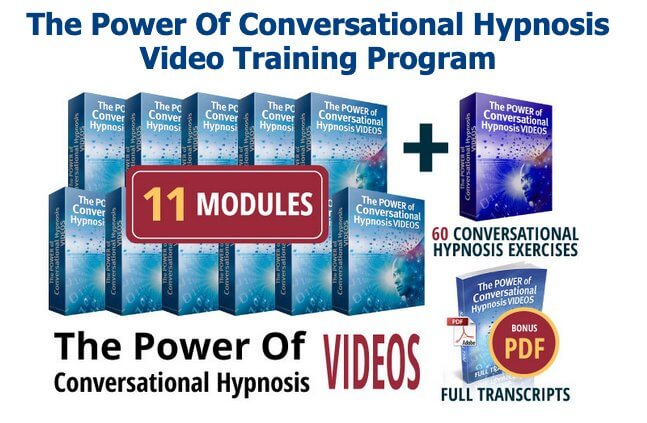
If you want to go deeper and master frame control to use it seamlessly in your conversations and hypnosis sessions to amplify your positive influence, you can take the text step with the Power of Conversational Hypnosis Video Training Program. Find out more here:



![[ADVANCED GUIDE] How To Master Hypnotic Regression Therapy - Part I: Essential Principles To Profoundly Transform Your Subject’s Emotional Trauma](https://hypnosistrainingacademy.com/wp-content/uploads/2016/09/hypnotic-regression-therapy-essential-principles.jpg "[ADVANCED GUIDE] How To Master Hypnotic Regression Therapy - Part I: Essential Principles To Profoundly Transform Your Subject’s Emotional Trauma")


![Yogic Breathing For Hypnosis: 3 Easy Techniques To Ground & Relax Your Clients Before Inducing A Hypnotic Trance [Includes Infographic]](https://hypnosistrainingacademy.com/wp-content/uploads/2019/05/yogic-breathing-for-hypnosis.jpg "Yogic Breathing For Hypnosis: 3 Easy Techniques To Ground & Relax Your Clients Before Inducing A Hypnotic Trance [Includes Infographic]")