There’s a moment most of us have experienced at least once:
You’re about to make a decision — take a job, trust a person, get into a car, walk down a street — and something in you hesitates. Not your logical mind, but something deeper you can’t quite explain.
Sometimes you listen to it. Sometimes you don’t.
And sometimes, looking back, you realize: that feeling knew.
That’s your intuition. And according to science, it’s not a hunch, a mood, or a personality quirk. It’s your unconscious mind sending up a signal.
The problem? Modern life is extraordinarily good at burying it.
This article is about getting that signal back. You’ll find out what the research actually says about intuition, why so many people have lost touch with it, and how self-hypnosis can quiet the mental noise enough that your deeper intelligence can finally be heard.
What Is Intuition, Really?
Let’s start at the very beginning — with the word itself.
“Intuition” comes from the Latin intueri — a compound of in (meaning “inward” or “upon”) and tueri (meaning “to look, watch over, guard”). Literally translated, it means to look inward or to contemplate from within. Notably, tueri is the same root that gives us the word tutor — one who watches over.
So at its etymological heart, your intuition is an inward guardian. You can think of it as a protector looking out for you from beneath the level of conscious thought.
Turns out, that’s almost exactly what the science says it is.
Before we explore why so many of us have lost touch with our intuition, it helps to understand what it actually is — because popular culture has done it a disservice.
Intuition is not magic or some sort of psychic gift.
Researchers define intuition as a form of rapid, non-conscious information processing — the mind’s ability to draw on stored patterns, emotional memory, and sensory data to arrive at a knowing without going through the slow machinery of conscious reasoning.
In other words, your unconscious mind has been watching, learning, and cataloguing your entire life. Every face you’ve read, every dangerous situation you’ve navigated, every moment a social interaction felt “off” — it’s all filed away.
And when a new situation arrives that pattern-matches to something stored, your unconscious mind sends up a rapid signal.
That signal is intuition.
A landmark 2016 study from the University of New South Wales, published in Psychological Science, was among the first to provide concrete, measurable evidence that intuition genuinely exists and influences decision-making. Researchers found that participants consistently made faster, more accurate, and more confident decisions when they were receiving unconscious emotional cues — even when they had no awareness of receiving them.
Their bodies knew before their minds did.
This aligns with what Nobel Prize-winning economist Daniel Kahneman called “System 1” thinking — a fast, pattern-based cognitive process that runs beneath conscious awareness. His research showed that this rapid system, while sometimes prone to bias, is also capable of extraordinary feats of perception that slow, deliberate reasoning simply cannot match.
The HeartMath Institute’s research adds another fascinating layer: there is a measurable, bidirectional communication between the heart and the brain. The heart, they found, appears to respond to information before the brain consciously processes it — as if some part of us is already “ahead” of the moment we’re in.
This intuitive response manifests as a physiological signal: a shift in heart rate variability, a change in skin conductance, a tightening in the chest or gut.
Your body, it turns out, is a remarkably sophisticated intuition antenna.
Real Stories of Intuition in Action
No amount of research, however compelling, hits quite like a real story. And the world is full of them.
Like the story about a nurse who had a patient recovering well after minor surgery, cleared for discharge. She couldn’t explain why, but something felt wrong all day. She kept checking in on him. When she finally insisted on one more test — a VQ scan, after all other results came back normal — doctors discovered extensive blood clots in both lungs. He would almost certainly have died at home that night.
Staff Sergeant Martin Ritchburg was at an internet café on a military base in Iraq, speaking to his wife back home, when a stranger walked in. Nothing was visibly wrong. But something shifted in the soldier’s gut — a certainty that felt almost physical. He cleared the café. The man had planted a bomb. Seventeen lives were saved. The U.S. military took this type of story so seriously that they invested $3.85 million in a formal program through the Office of Naval Research to study and develop “battlefield intuition” in soldiers and marines.
A mother dropped her three-year-old off at daycare, drove to work, and was overwhelmed by a sudden, inexplicable feeling that something was wrong with her son. She left work and drove back. She found the daycare worker asleep inside while several small children played, unsupervised, near a pool.
A woman 35 weeks into her third pregnancy felt a deep, urgent knowing that her baby needed to arrive soon. She went to the hospital against routine advice. An emergency caesarean revealed her daughter’s umbilical cord had formed two true knots and was wrapped around her neck.
These aren’t outliers. They’re examples of something researchers now take seriously: a genuinely measurable form of human perception that operates beneath the threshold of conscious thought, and that (when listened to) can change outcomes in dramatic ways.
What’s notable in each of these stories is not that the people had special powers. It’s that they listened instead of overriding the signal with logic or dismissing the feeling as irrational. They acted.
Why Have So Many of Us Lost Touch With Our Intuition?
Every child is exquisitely tuned to their inner experience. Young children haven’t yet learned to distrust what they feel. They act on their instincts naturally, without apology. The disconnection comes later — and modern life is very good at engineering it.
1. We Live in a Culture That Worships Logic
Western society has, for centuries, treated rational, analytical thought as the only legitimate form of intelligence. Logic is valued, data is currency. Anything that can’t be measured or explained is treated with suspicion, even contempt.
This cultural bias runs deep. From the time we enter school, we’re taught to justify our thinking, to show our work, to give reasons. “I just know” is not an acceptable answer in a boardroom, a courtroom, or a classroom.
And so, gradually, we learn to discount the signals we can’t explain — even when they’re correct.
Carl Jung defined intuition as “perception via the unconscious” — a function of the mind that processes far more than reason can consciously access. Yet in mainstream Western culture, his insight was largely sidelined in favor of the analytical, left-brain paradigm that came to dominate psychology, medicine, education, and business.
Many traditional cultures maintained a sophisticated relationship with inner knowing as a respected and cultivated form of intelligence. Indigenous wisdom traditions, contemplative practices from East and West, and ancient healing arts all treated intuition not as a curiosity but as a developed skill — one that required cultivation, stillness, and attention.
The triumph of analytical thinking is genuinely important. Reason and evidence have given us medicine, technology, and science. But in our rush to lionize the logical mind, we’ve devalued the intuitive mind — and that’s a massive loss.
2. We’re Overstimulated and Chronically Distracted
There’s another force working against intuition in the modern world, and it may be even more powerful than cultural bias: noise.
The average human today is bombarded with more information in a single day than a person in the 15th century would have encountered in an entire lifetime. Notifications, news cycles, social media, emails, podcasts, ads — the stimulation is relentless, wall-to-wall, and by design addictive.
This matters because intuition requires something that modern life rarely delivers: quiet.
The unconscious mind sends its signals softly. A subtle unease, a quiet pull in a particular direction. A persistent sense that something isn’t right — or that something is exactly right.
These signals are not loud. They can’t shout over the noise of a constant notification stream or the mental chatter of a racing, over-scheduled mind.
Research has found that intuitive insights tend to arise when the brain is in what’s called an “alpha wave” state — a relaxed, internally focused mode of consciousness that’s associated with daydreaming, meditation, and creative insight.
This is precisely the state that chronic overstimulation destroys. When you are perpetually busy, perpetually reactive, perpetually distracted, you never drop into the frequency where your deeper intelligence speaks.
The result?
Your intuition is still sending signals you just simply become too noisy to hear them.
3. We’ve Been Taught to Distrust Our Own Inner Experience
Beyond culture and noise, there’s a third and more personal barrier: learned self-doubt.
Many people carry a history of being told that their feelings were wrong, irrational, too much, or untrustworthy. This can come from well-meaning parents who were themselves disconnected from their intuition. It can come from relationships where our inner signals were consistently overridden or denied.
Chronic anxiety can also muddy the waters, creating false signals that feel like intuition but are rooted in fear rather than genuine inner guidance. This is why learning to distinguish between fear-based reactions and genuine intuitive knowing is such an important part of developing this skill.
4. We’ve Never Been Taught How to Listen
Perhaps the most fundamental reason we’re cut off from our intuition is simply that nobody taught us how to work with it.
We receive extensive education in analytical reasoning. We learn to read, write, calculate, and argue. But we receive almost no education in inner listening — in the practice of quieting the conscious mind, attending to the body’s signals, and cultivating the kind of receptive awareness that allows deeper intelligence to surface.
What Does Intuition Feel Like?
If you’ve dismissed your intuition as too vague or elusive to be useful, it may be because you haven’t learned to recognize its language. Intuition rarely announces itself like a thought. It communicates through subtler channels — and once you know what to look for, you’ll start noticing it everywhere.
Physical sensations. The gut feeling — that tightening, sinking, or fluttering in the abdomen — is perhaps the most well-known. Research confirms that the body shows measurable physiological reactions to unconscious cues — shifts in skin conductance, heart rate, and muscle tension — before the conscious mind has registered anything.
Intuition also speaks through the chest (a contraction vs. an opening), the throat, the shoulders, and the whole-body “yes” or “no” that’s hard to describe but unmistakable when you feel it.
Sudden clarity or certainty. You’ve been wrestling with a decision for days. You go for a walk, or wake up from a dream, or step into the shower — and suddenly you simply know. Not because you’ve reasoned your way to an answer, but because one emerged. This is the unconscious mind delivering its conclusion after doing its processing out of sight.
Persistent feelings you can’t logic away. You talk yourself out of the feeling. Your friends reassure you, the evidence seems to say everything is fine. And yet the feeling remains. This persistence is worth noting — genuine intuitive signals tend not to go away just because you argue with them.
Inexplicable attraction or repulsion. You meet someone and feel immediately, warmly at ease — or immediately, wordlessly cautious. As one psychologist explains, the nervous system is constantly picking up on subtle cues — micro-expressions, tone of voice, body language — and matching them to patterns from past experience. What we call a “bad feeling about someone” is often this process surfacing as a signal.
Recurring thoughts, images, or dreams. The unconscious mind loves symbols and repetition. If a particular thought, theme, or image keeps surfacing across different contexts — in quiet moments, in dreams, in moments of stillness — it may be pointing to something worth exploring.
The “I knew it” feeling. That gut-punch recognition when something plays out exactly as you’d feared, despite having told yourself you were being irrational. The recognition itself is useful data: it means the signal was real. And it means you can trust it next time.
How Strengthening Intuition Improves Your Life
Reconnecting with your intuition isn’t a minor lifestyle adjustment. For many people who commit to it, it becomes genuinely transformative — a before-and-after in the way they navigate decisions, relationships, and their own sense of direction.
Better decisions. Research consistently shows that combining intuitive awareness with analytical reasoning leads to better outcomes than either alone — particularly in complex, ambiguous situations where data is incomplete.
Gary Klein’s famous studies of experienced firefighters found that in high-stakes, fast-moving situations, seasoned commanders didn’t deliberate between options — they acted on pattern-recognition so fast it felt like instinct, not recklessness. Expertise translated into intuition.
Deeper relationships. Intuition makes you more perceptive to others — to the gap between what people say and what they mean, to the subtle signals in tone and body language, to the emotional undercurrents in a room.
People who are strongly connected to their intuition tend to be described as unusually empathetic and attuned. This has enormous implications for anyone in a helping profession — therapists, coaches, hypnotherapists, teachers, parents.
More effective hypnotherapy sessions: The most skilled hypnotherapists often describe a felt sense during sessions: a moment when they know, before the client has fully articulated it, where the real issue lies.
They pick up on the slight hesitation before an answer, the shift in breathing, the word chosen and then quickly replaced. This kind of perception — rapid, non-conscious, pattern-based — is intuition in action, and it changes what’s possible in a session.
When you can sense what a client needs before they can name it, you stop following a script and start genuinely meeting them where they are. That’s when the deepest work happens.
Greater authenticity. Another gift of a developed intuition is a clearer relationship with what you actually want versus what you think you should want, or what others expect of you. The intuitive signal tends to be honest in ways the rational mind is not. It knows when you’re performing, when you’re settling, when you’re going in the wrong direction — even when the logic of a situation says otherwise.
Faster, less effortful navigation of life. Much of the exhaustion of modern life comes from overthinking — from running every decision through endless loops of analysis, second-guessing, and what-if. A developed intuition doesn’t eliminate deliberate thought; it guides it. It helps you know which things actually deserve extended analysis and which things your gut can resolve in a heartbeat.
How to Cultivate Your Intuition
Developing your intuition is less about adding something new to your life and more about subtracting the interference. It’s about creating the conditions in which your deeper intelligence can be heard.
Slow down and create genuine stillness. Even five to ten minutes of genuine quiet daily — without screens, without input, without agenda — begins to re-sensitize you to your inner signals. Stillness isn’t passive. It’s the environment in which intuition becomes audible.
Practice body awareness. Begin checking in with your body regularly throughout the day. Before making a decision, pause and notice what your body is doing. Is there tightness? Ease? A sinking or a rising? The body holds information that the mind hasn’t caught up with yet. Learning to read it takes practice, but it’s a learnable skill.
Keep a journal of your intuitive hits. Military researchers working on intuition training recommend exactly this: noting the times you had a feeling about something and it proved correct — and the times you overrode a feeling and wished you hadn’t. This builds conscious awareness of your intuitive track record and helps you distinguish genuine intuition from anxiety or wishful thinking.
Minimize unnecessary noise and stimulation. The effect of reducing screen time, notification overload, and constant content consumption on your inner sensitivity is profound. You don’t need to live like a monk. But if your mind is perpetually occupied, your intuition has nowhere to surface.
Spend time in nature. Research consistently links time in natural environments with the kind of relaxed, internally focused attention associated with intuitive insight. The rhythms of the natural world seem to recalibrate something in the human nervous system that modern environments disrupt.
Learn to notice without immediately judging. Much of what blocks intuitive awareness is the rapid analytical labelling we do as soon as something enters consciousness. Practice catching your immediate, pre-rational response to situations — before the thinking mind rushes in to categorize and explain. That first flicker is often worth paying attention to.
Gaining Deeper Access To Your Intuitive Mind Through Self-Hypnosis
Your intuition lives in the unconscious mind. It processes information below the threshold of conscious awareness. And the conscious mind — with its logic, its noise, its constant analysis and self-commentary — acts as a kind of barrier to that deeper layer. Most of the time, you can’t simply decide to listen to your unconscious. The waking, thinking mind is too loud, too busy, too dominant.
Self-hypnosis changes this dynamic.
In a self-hypnotic state, the critical, analytical activity of the conscious mind quiets. The brainwave frequency shifts — typically from the beta waves of normal waking awareness to the alpha and theta states associated with deep relaxation, creativity, and inner receptivity.
Theta activity in particular is linked to creativity, intuition, daydreaming, and a repository of memories, emotions, and sensations. In this state, the barrier between conscious and unconscious becomes permeable. The chatter fades, and what’s beneath — including the intuitive intelligence your unconscious has been quietly accumulating — becomes accessible.
This is why so many people report breakthroughs during hypnosis or deep meditative states: not because anything new has been put in, but because what was already there can finally be heard.
People who practice self-hypnosis consistently report becoming more perceptive, more attuned, more likely to catch the signal before the noise of the day buries it.
Because the unconscious mind communicates in the language of imagery, symbol, and metaphor, self-hypnosis creates a direct line of communication in the very language your deeper intelligence speaks.
The challenge is that most self-hypnosis focuses on relaxation, imagery and repeated suggestions rather than giving you the tools to actually understand and communicate your unconscious mind.
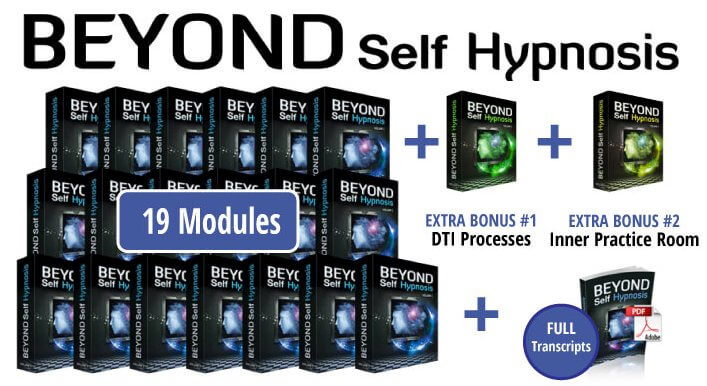
That’s precisely what Igor Ledochowski’s Beyond Self-Hypnosis program is designed to do – it shows you how to access your deep unconscious content and gives you the tools to safely interact with them.
In other words, you interact directly with the more intuitive part of your mind.
The result?
You begin to incrementally extend and enlarge the limits of your mental map so you suddenly have greater inner resources, energy and capabilities available to you to do and achieve the things you really want to be able to do in your life.
If you’re ready to start expanding what’s actually possible for you, Beyond Self-Hypnosis gives you the tools to do exactly that — even if you’re brand new to self-hypnosis.
Give it a try and see what a difference it makes in unlocking your inner intuitive superpower.
Find out more here:



![Yogic Breathing For Hypnosis: 3 Easy Techniques To Ground & Relax Your Clients Before Inducing A Hypnotic Trance [Includes Infographic]](https://hypnosistrainingacademy.com/wp-content/uploads/2019/05/yogic-breathing-for-hypnosis.jpg "Yogic Breathing For Hypnosis: 3 Easy Techniques To Ground & Relax Your Clients Before Inducing A Hypnotic Trance [Includes Infographic]")
![[ADVANCED GUIDE] How To Master Hypnotic Regression Therapy - Part I: Essential Principles To Profoundly Transform Your Subject’s Emotional Trauma](https://hypnosistrainingacademy.com/wp-content/uploads/2016/09/hypnotic-regression-therapy-essential-principles.jpg "[ADVANCED GUIDE] How To Master Hypnotic Regression Therapy - Part I: Essential Principles To Profoundly Transform Your Subject’s Emotional Trauma")